World-Renowned Geneticist Prof. Sarah Tishkoff Highlights Africa’s Central Role in Human Genetics
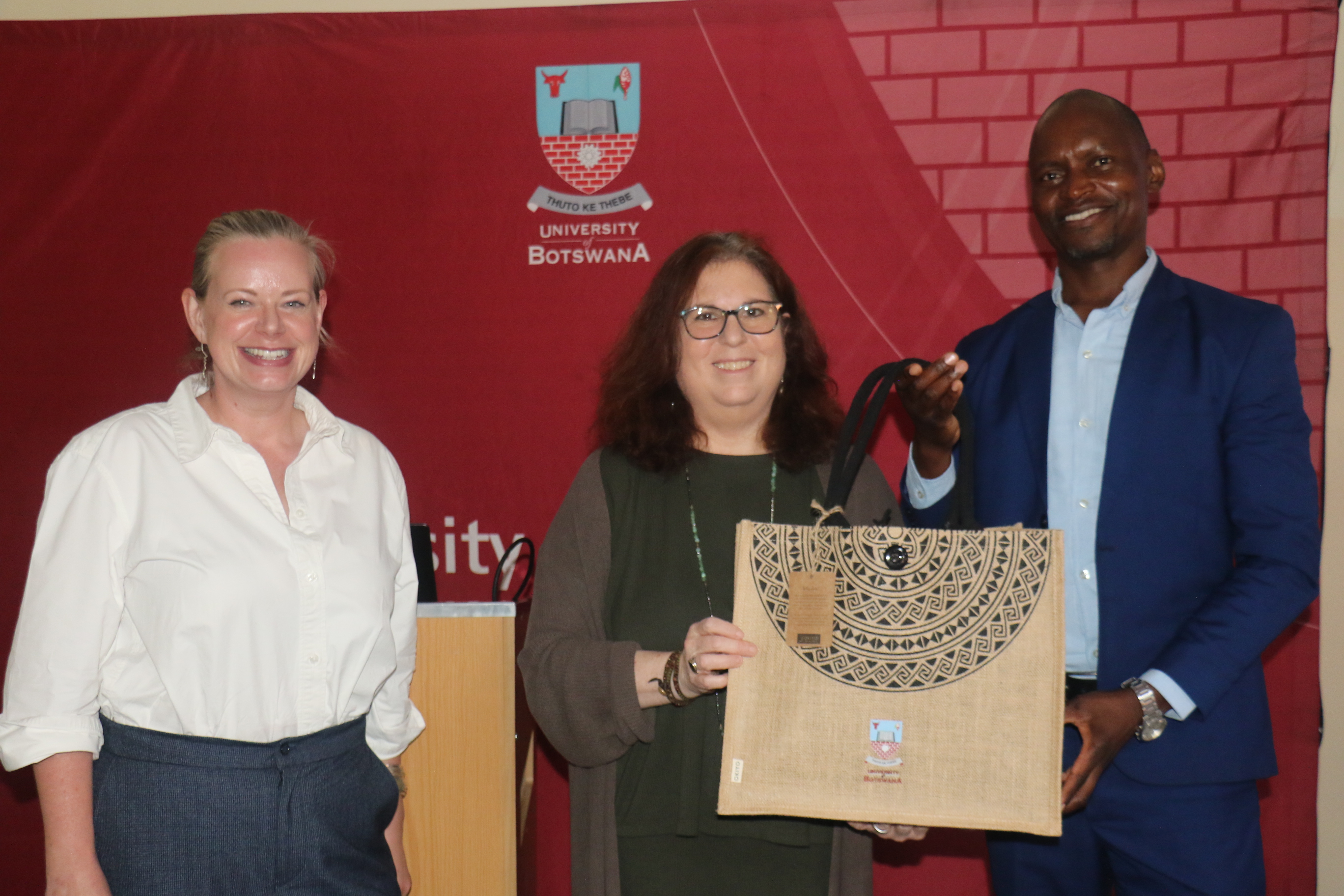 The Executive Dean of the Faculty of Natural and Applied Sciences at the University of Botswana, Professor Sununguko Wata Mpoloka, on the 6th of October 2026 welcomed world-renowned geneticist Professor Sarah Tishkoff to the University for a public lecture on Africa’s genomic legacy and its implications for human origins, evolution and health.
In his welcoming remarks, Professor Mpoloka highlighted the historical underrepresentation of African populations in global genetic research and acknowledged Professor Tishkoff’s significant contribution to addressing this gap.
“As some of you will know, for a long time Africans have always been left out in genetic studies, so Professor Sarah [Tishkoff] actually bridges that gap,” he said.
The lecture, titled Africa’s Genomic Legacy: Tracing Human Origins and Adaptation, brought together academic leaders, researchers, staff and students to explore Africa’s foundational role in human genetics and medical science.
Professor Tishkoff, the David and Lynn Silfen University Professor in Genetics and Biology at the University of Pennsylvania, underscored the importance of studying genetic and phenotypic variation across diverse populations particularly those historically underrepresented in research. She said such research was critical to advancing understanding of human evolution, improving medical research and developing more effective healthcare interventions.
“All modern humans originated in Africa,” said Professor Tishkoff, noting that between 60,000 and 80,000 years ago, small groups migrated from Africa to other parts of the world. Despite visible geographical and physical differences among populations, she explained that human genomic variation worldwide differed by less than 0.1 percent, reflecting a relatively recent shared African ancestry.
Addressing challenges in contemporary healthcare research, Professor Tishkoff highlighted the persistent imbalance in global genomic databases. She noted that the overwhelming majority of genome-wide association studies had focused on populations of European descent while only about two (2) percent represent individuals of African ancestry.
“That’s a real problem,” she cautioned. “It’s going to hurt our ability to understand genetic risk factors for human disease and could exacerbate health inequalities.” She added that translating genetic discoveries into clinical practice and public health policy could remain incomplete or inaccurate if diverse populations continued to be excluded from genomic studies.
Professor Tishkoff also stressed the importance of conducting research ethically through meaningful community engagement, local-language translation, informed consent and transparent benefit-sharing.
“We spend a lot of time going to communities, having group discussions, translating into the local language, explaining in layman’s terms what we’re doing, what the risks are and what 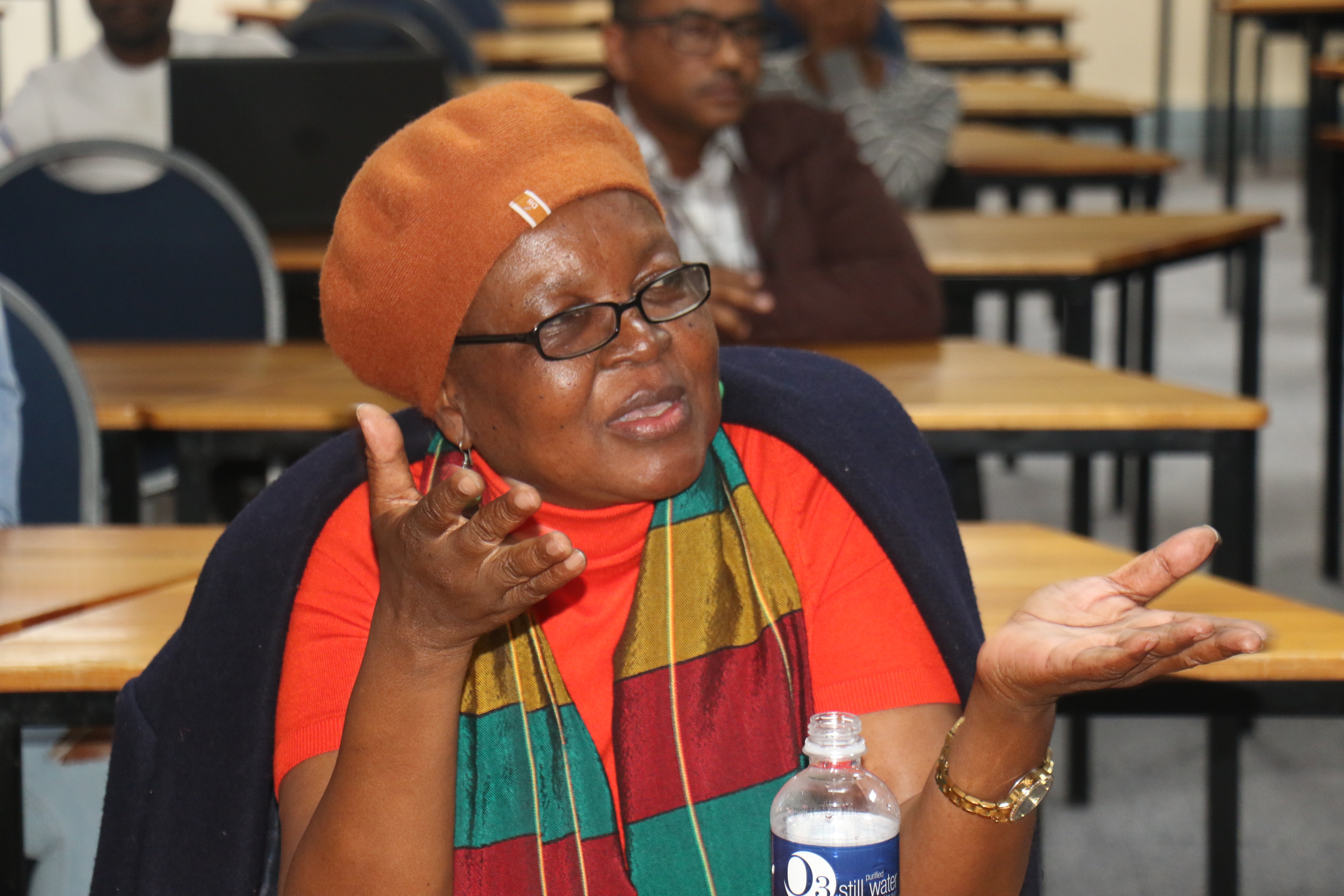 the benefits are,” she explained. “It is only after we get community consent and individual consent that we can proceed.”
The lecture concluded with a lively question-and-answer session, providing attendees an opportunity to engage directly with Professor Tishkoff on genomics, human evolution and the future of precision medicine in Africa.
Delivering the vote of thanks, Director of the Office of Research and Development, Ms Kimberly Cornfield, expressed appreciation to Professor Tishkoff for sharing her expertise and thanked participants and organisers for contributing to the success of the event.