UB, UWI Seek to Turn Strategic Partnership into Impactful Collaboration
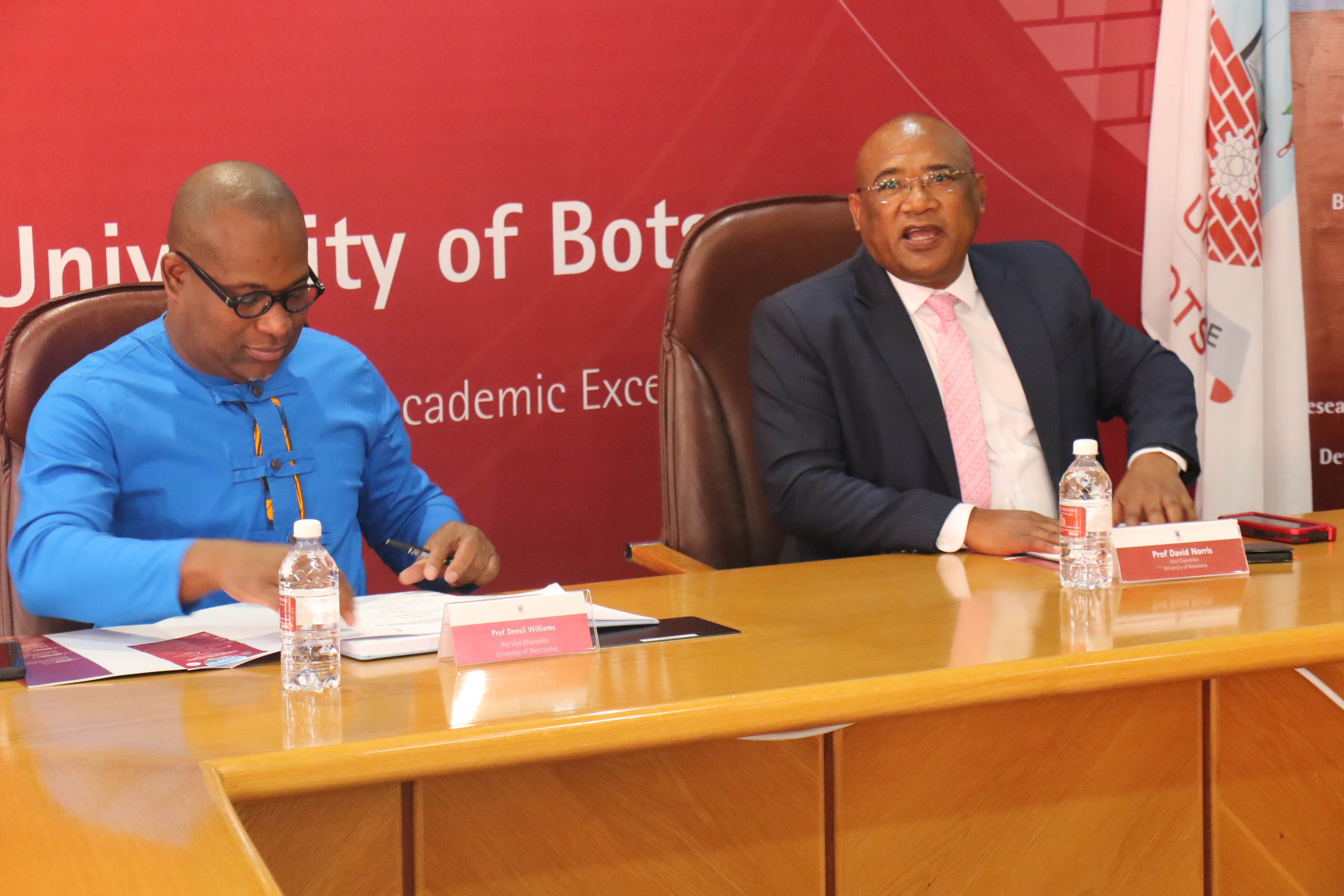 The University of Botswana (UB) and The University of the West Indies (UWI) have reaffirmed their commitment to turning their existing partnership into tangible collaboration, with both institutions identifying research, innovation, human capital development and industry engagement as key areas for cooperation.
The commitment emerged during a meeting between UB management and a delegation from UWI Mona Campus led by Pro Vice-Chancellor and Campus Principal, Professor Densil Williams, on Monday, 24th August 2026. The UWI delegation is on a week-long visit to UB aimed at operationalising the Memorandum of Understanding (MoU) signed between the two institutions in 2024.
Welcoming the delegation, UB Vice Chancellor, Professor David Norris, said the relationship between UB and UWI was strategically important because both institutions have played significant roles in the development of their respective countries and regions. He noted that UWI's graduates have made a substantial contribution across the Caribbean just as UB graduates have played a prominent role in Botswana's development.
He said there was considerable scope for collaboration in areas including renewable energy, environmental science and technology, skills development, tourism, medicine, sport, cybersecurity and research. He also pointed to UWI's experience in cultural and creative industries including its involvement in the GATFFEST Film Festival, as an area from which UB could learn. GATFFEST is an established UWI Mona film festival that brings together local and international filmmaking and community engagement.
Professor Norris said cybersecurity was another area of potential collaboration, noting UWI Mona's longstanding work through the Mona ICT Policy Centre, which has hosted national cybersecurity initiatives and undertaken work in cyber policy and digital security.
He said the partnership came at an important stage in UB's transformation as the University implements its new strategic direction and moved towards becoming a High-Performance Organisation (HPO). He explained that the transformation sought to cultivate a culture of excellence, efficiency, agility and responsiveness while strengthening the University's contribution to society.
“Research and innovation are at the core of this strategy,” said Professor Norris, stressing that research should no longer end with publication but should increasingly translate into products, solutions and measurable societal impact. That, he said, required stronger partnerships with industry, universities and other institutions.
He added that UB was seeking to strengthen the quality and relevance of its teaching, enhance multidisciplinary research through research clusters and increase its international footprint. The University also aims to become more entrepreneurial and strengthen its capacity to generate third-stream income.
Responding to Professor Norris, Professor Williams said the visit was intended to deepen a partnership that was deliberately established as part of UWI's strategy to build relationships with high-quality universities around the world.
He said UWI, which had been in existence for 78 years, recognised that partnerships were essential to mobilising resources, expanding expertise and increasing institutional impact. Quoting the African proverb, “If you want to go fast, go alone; if you want to go far, go together,” Professor Williams said UWI was seeking partners with whom it could go further.
He said UWI's strategic direction was driven by three key priorities: access, alignment and agility. The institution was seeking to expand access to post-secondary education, particularly among underserved communities while ensuring that its academic programmes, research portfolios and operations remained aligned with regional needs and that the institution could adapt rapidly to a changing environment.
Professor Williams said the Caribbean continued to face challenges relating to low levels of human capital development and access to higher education. UWI, therefore, had to look beyond the region for partnerships and global examples that could help address these challenges.
He said UWI was also seeking stronger relationships with industry to ensure that its programmes and research responded to real-world needs.
Professor Williams described his visit to UB as timely, saying the two universities appeared to be pursuing similar strategic objectives and could learn significantly from each other's experiences. He added that external partnerships and validation were important in strengthening institutional credibility and demonstrating the quality and leadership of both institutions.
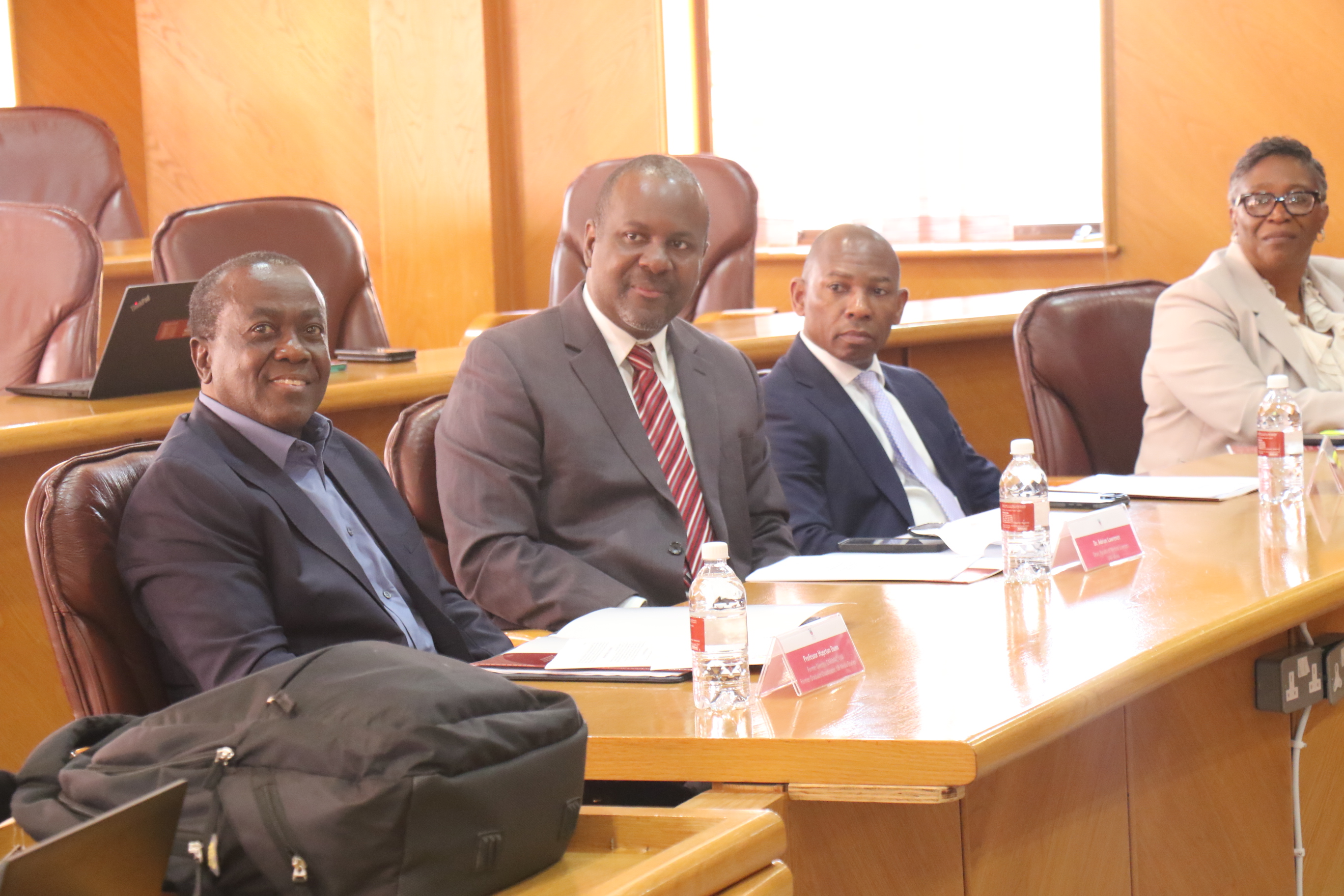 Acting Deputy Vice Chancellor for Teaching and Learning, Professor Maria Nnyepi, welcomed the delegation and said UWI represented an ideal partner for UB particularly given its strong standing in areas such as medical education. Professor Nnyepi noted that the shared vision of the two institutions and the strategic direction being provided by their respective Vice Chancellors created a strong foundation for meaningful collaboration.
The UWI delegation's visit will include engagements with UB's leadership, faculties and departments in areas identified as having potential for collaboration, with the aim of moving the existing MoU from a framework of cooperation to concrete programmes and initiatives.