UB positioned to drive digital skills revolution through global partnership
 The University of Botswana (UB) is positioning itself at the forefront of an ambitious global skills development initiative expected to equip thousands of young people with competencies needed for the rapidly evolving digital economy.
Through a newly formalised partnership with Destination Imagination (DI), UB will become the first of four African institutions and countries to benefit from a US$1.2 billion initiative designed to address critical global skills shortages while creating employment opportunities.
The partnership which was formalised at a ceremony held at the University on the 4th of September 2026, will focus on developing skills in cybersecurity, digital hygiene, cloud computing and artificial intelligence (AI), areas in which there is growing demand for skilled professionals worldwide.
Speaking at the ceremony, Acting Deputy Vice Chancellor Teaching and Learning, Professor Maria Nnyepi, said the initiative was particularly relevant at a time when technological advancement was fundamentally transforming the world of work.
“Every era has its own technology. We are now in the era of AI,” she said, adding that students must be equipped not only to use artificial intelligence but also to critically evaluate the technologies available to them and select appropriate tools for their respective fields.
Professor Nnyepi said digital competence had become increasingly important as institutions and industries embraced new technologies especially cloud-based systems. She noted that the partnership would help equip students and staff with skills needed to navigate an increasingly digital working environment.
Beyond technical competencies, the programme will also focus on developing critical thinking, emotional intelligence and financial literacy, recognising that success in the modern workplace requires a combination of technical expertise and broader professional skills.
Professor Nnyepi emphasised the importance of monitoring the programme's outcomes, saying both partners should regularly assess its impact and make adjustments where necessary.
Destination Imagination Chief Executive Officer, Mrs Sally Kimangu, said the initiative was designed to respond directly to skills shortages being experienced across industries globally particularly in areas such as cybersecurity.
She said DI would train 10 000 people over a six-month period, with the programme seeking to prepare participants for employment and connect them with organisations looking for skilled professionals.
According to Mrs Kimangu, DI works with industry partners to identify skills gaps and understand the needs of employers, enabling training programmes to respond to real challenges within the workplace.
The organisation has partnered with major international corporations and institutions, among them ABSA, IBM, Google and Microsoft, which contribute to various aspects of the initiative including funding and identifying critical skills requirements.
Mrs Kimangu said DI had already undertaken an assessment of resources required at UB to support the successful implementation of the programme.
She noted that while the two (2) organisations had collaborated on several initiatives in the past, the new agreement provided an opportunity to formalise and strengthen their partnership.
The initiative also places particular emphasis on empowering Africa's youthful population. Mrs Kimangu said young people possessed the energy and willingness to work but required appropriate training, exposure and an enabling environment to realise their full potential.
She said the programme was intended to create opportunities for young people to develop the skills and confidence needed to participate meaningfully in the digital economy.
ABSA Head of Marketing and Corporate Affairs, Mr Dennis Mambure, welcomed the collaboration and underscored the importance of bridging the gap between academic qualifications and workplace competencies.
He noted that many ABSA employees were UB graduates and said institutions of higher learning and industry had a shared 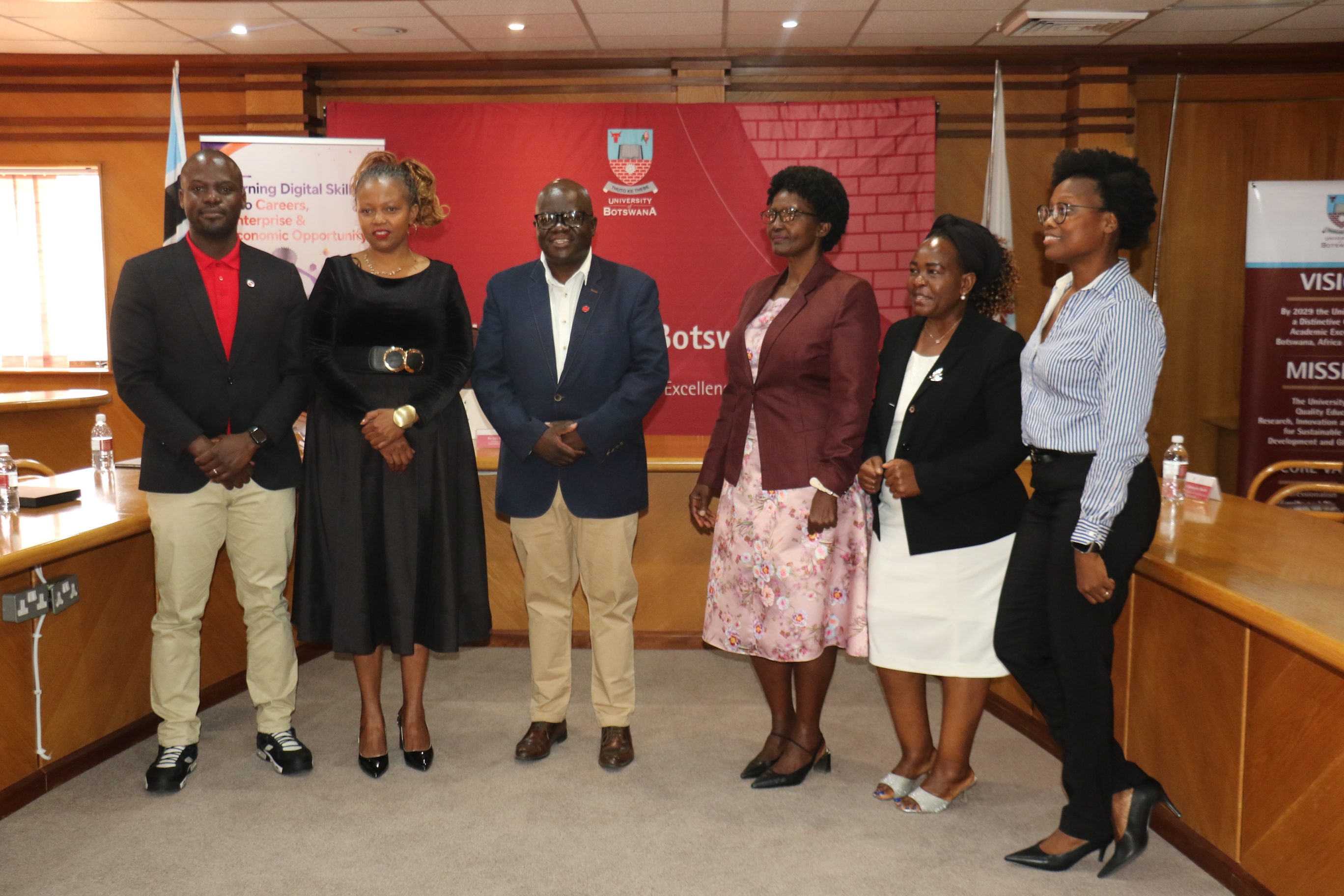 responsibility to ensure that graduates were adequately prepared for the demands of the workplace.
Mr Mambure said programmes such as ABSA's internship initiatives provided graduates with opportunities to gain practical experience and develop skills that could enhance their transition from university into the world of work.
For UB, the partnership represents another opportunity to strengthen its contribution to national development by ensuring that its students and other beneficiaries are equipped with skills that respond to emerging industry needs.