UB Law Society Engages Johns Hopkins University on Corruption and Human Rights
 University of Botswana Law Society (UBLS) recently hosted an academic dialogue with the International Human Rights Law Clinic of the Johns Hopkins University School of Advanced International Studies (SAIS), focusing on the impact of corruption on human rights, with Botswana as a case study.
The engagement explored how corruption undermines justice systems, governance structures and the realisation of international human rights obligations particularly within Botswana’s dual legal system, where Roman-Dutch law operates alongside customary law.
Former UBLS President and Associate Attorney at Desai Law Group, Mr Ba Shaquille Pofelo, noted that although Botswana was a signatory to international instruments such as the International Covenant on Economic, Social and Cultural Rights (ICESCR), effective application required domestication through national legislation.
Mr Pofelo further observed that Botswana scored 57 out of 100 on the global corruption perception index, prompting the establishment of institutions such as the Directorate on Corruption and Economic Crime (DCEC) to investigate, prevent and educate the public on corruption-related matters.
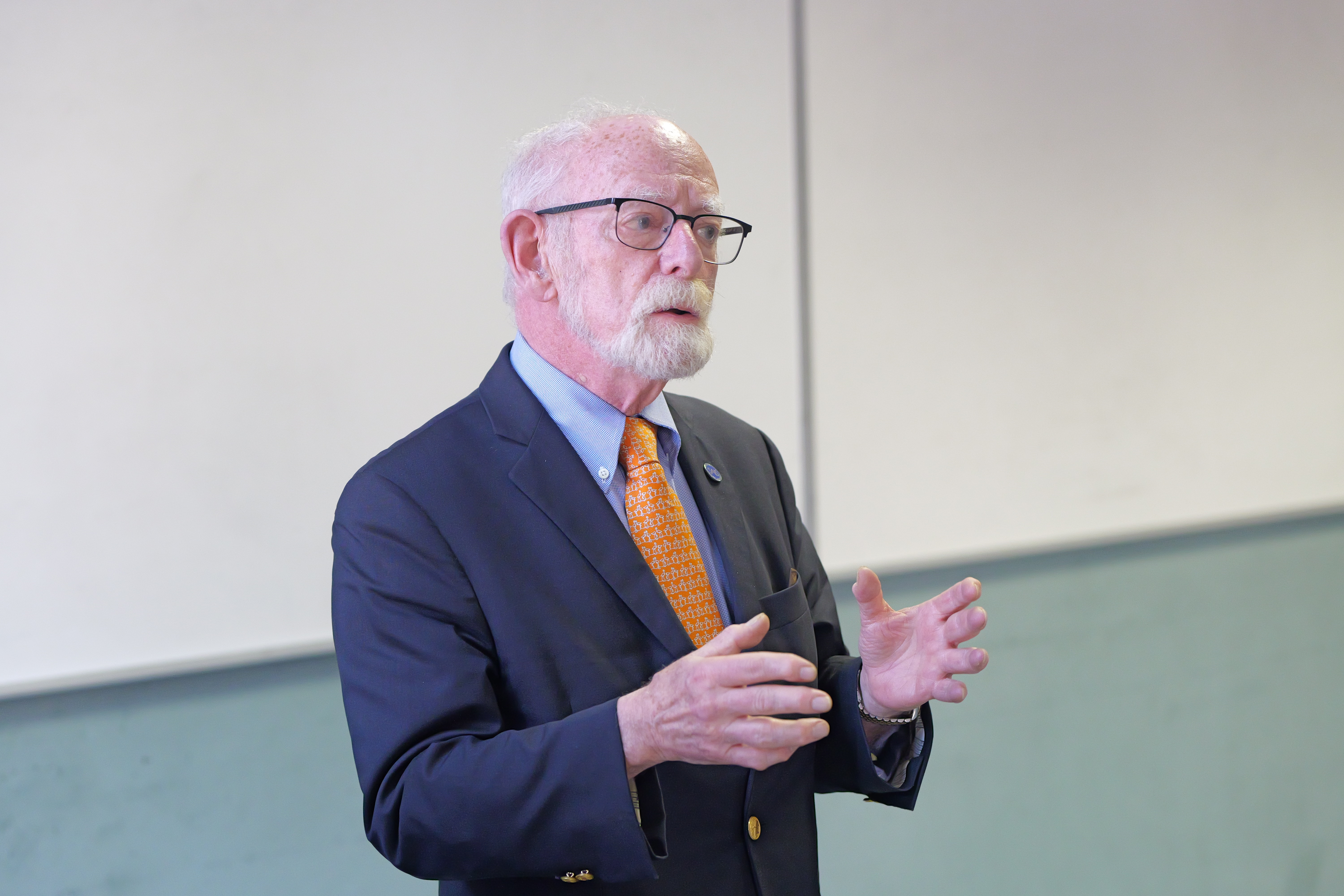
Delivering a keynote contribution, Professor Steven M. Schneebaum of Johns Hopkins University explained that legal commitments alone did not guarantee compliance, emphasising the importance of the rule of law and ethical legal practice in safeguarding human rights.
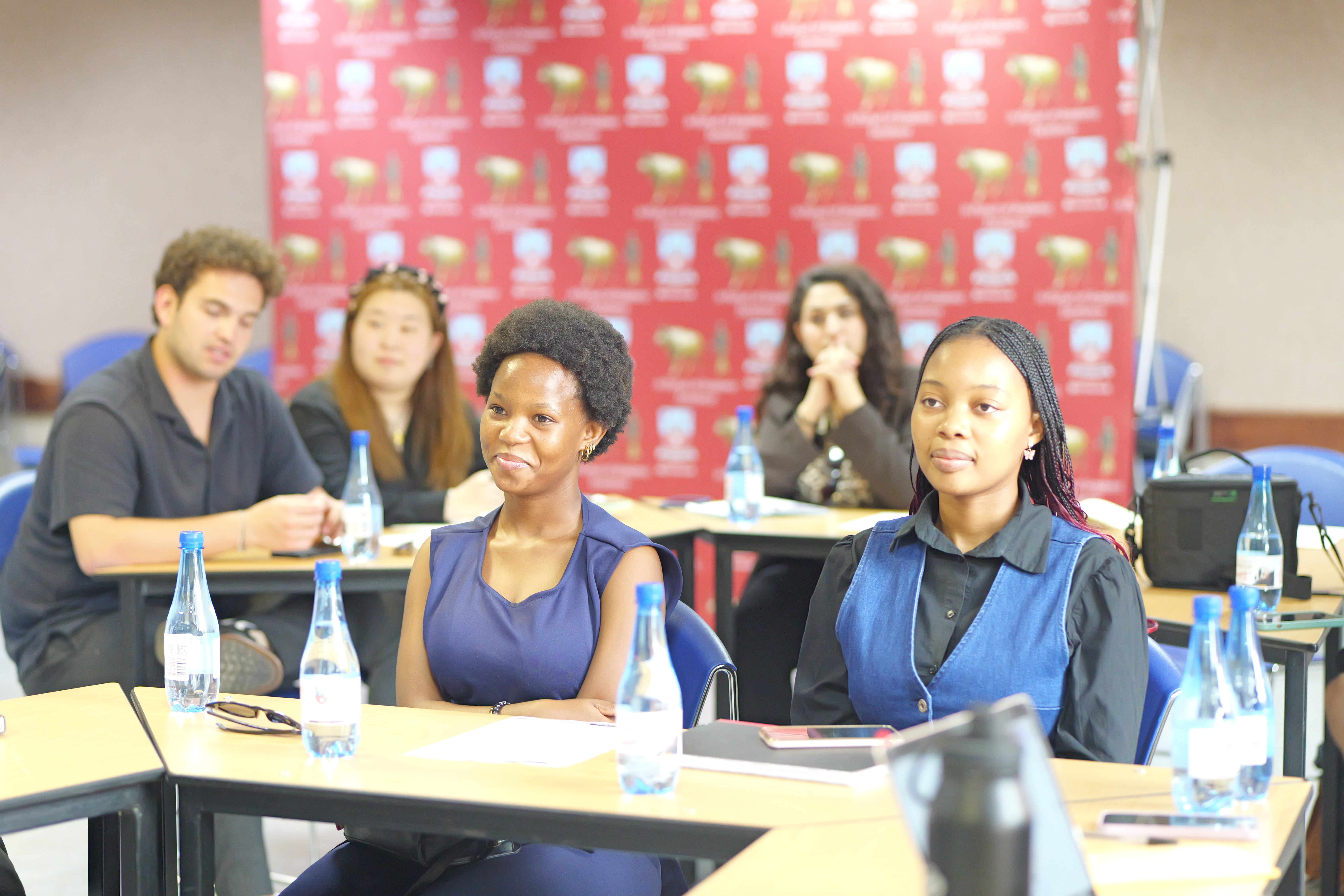 He encouraged law students to uphold professional integrity, noting that the responsibility to enforce accountability rested heavily on future legal practitioners.
Closing the session, Professor Tshepiso Seth Ndizinge-Makhamisa of the UB Department of Law commended the collaboration, highlighting its value in strengthening students’ understanding of complex legal and human rights issues through international academic exchange.
The engagement forms part of UBLS’s ongoing commitment to advancing legal scholarship, ethical leadership and cross-border collaboration.