UB Explores Data-Driven Solutions to Strengthen Botswana’s Healthcare System
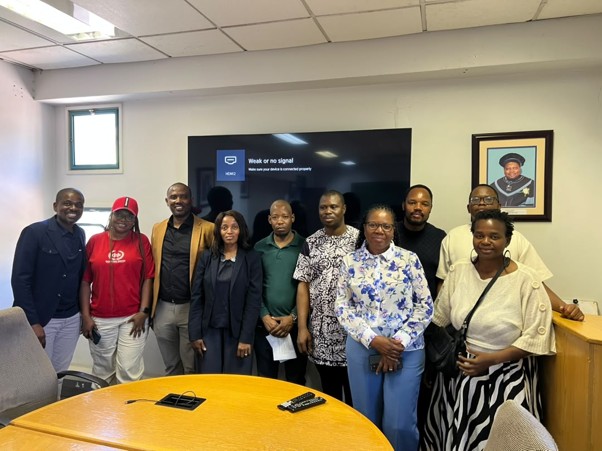 Botswana’s efforts to modernise healthcare delivery could benefit from greater use of data analytics, predictive modelling and integrated digital health systems, an approach explored at a University of Botswana (UB) scientific discussion on Health Intelligence Centres.
The discussion, held on the 30th of October 2026 by the Department of Statistics, Demography and Population Science, focused on Health Intelligence Centres: Transforming Health Data into Actionable Intelligence. It was facilitated by Dr Muhammed Semakula, Senior Lecturer in Statistics and Data Science at the African Centre of Excellence in Data Science, University of Rwanda.
Drawing on Rwanda’s experience in advancing digital health systems, Dr Semakula explored how Health Intelligence Centres can strengthen healthcare planning and service delivery by bringing together data, analytics and technological innovation.
The discussion examined four key areas: the transition from traditional health information systems to health intelligence systems; the application of advanced statistical modelling and predictive analytics; the use of statistical and demographic intelligence in healthcare planning; and partnerships involving universities, government, industry and communities.
A central message was that fragmented, paper-based health information systems are increasingly inadequate for the demands of modern healthcare. Integrated Health Intelligence Centres can enable policymakers and healthcare practitioners to identify emerging health risks, anticipate service demands, improve decision-making and respond more effectively to public health challenges.
Participants also considered Botswana’s existing capacity to advance this agenda especially its digital health infrastructure and expertise developed through the country's response to HIV/AIDS. They emphasised that achieving an integrated health intelligence system would require sustained collaboration among academia, government, industry, healthcare practitioners and communities.
The discussion highlighted the University’s potential contribution to developing the skills and expertise required for a future National Health Intelligence Centre. Through its academic programmes and research, UB could help build capacity in data science, artificial intelligence, software systems development, cybersecurity, data governance and digital health innovation.
Collaboration could also create opportunities for the Ministry of Health personnel to undertake postgraduate studies, participate in research and engage in knowledge exchange at the University, strengthening the connection between academic research, health policy and practice.
The session concluded with a call for continued stakeholder collaboration towards establishing a National Health Intelligence Centre capable of strengthening healthcare delivery and potentially providing a model for the application of data-driven intelligence in other sectors.