UB Budget Dialogue Highlights Solution Oriented Approach to Botswana's Financial Crisis
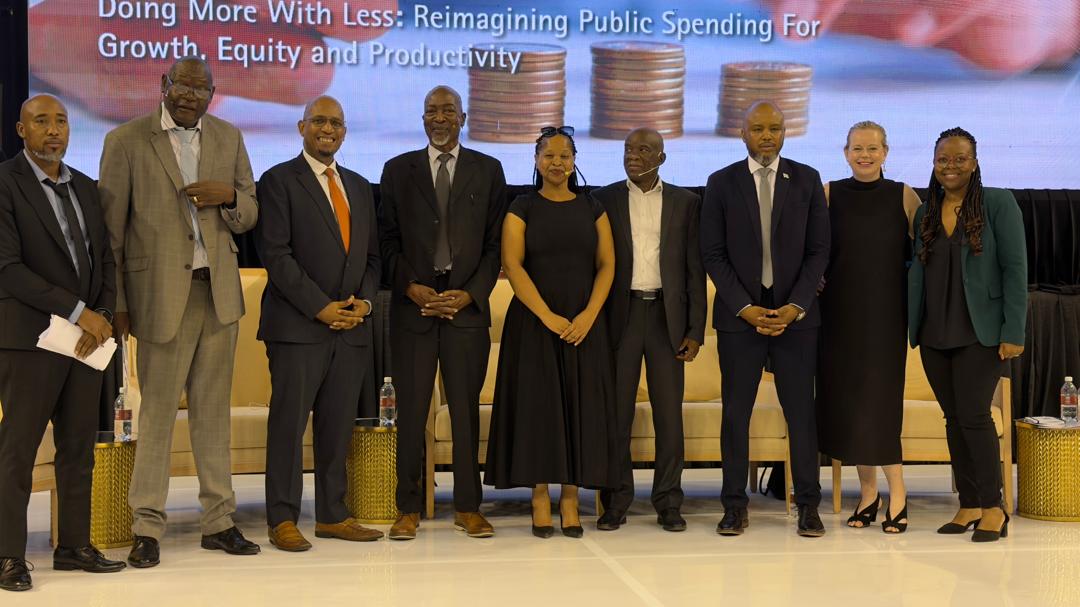 As Botswana continues to navigate the challenges of economic uncertainty, University of Botswana (UB), hosted its annual budget dialogue to spark critical conversations with diverse perspectives to interrogate the 2026/2027 National Budget. The event brought together policymakers, academics, economists and students.
In summing up the dialogue’s key takeaways, Professor Happy Siphambe from the Department of Economics observed a notable shift in tone compared to previous engagements. “One of the clear issues that is coming out is that we have stopped crying about what the problem is. We are now very much oriented towards solutions. We are attuned to not wasting a crisis,” he said.
Further, Professor Siphambe stressed the importance of aligning with transformation, spearheading a knowledge-based economy and prioritising research funding. Prof Siphambe also highlighted the role of digitalisation and partnerships, urging efficiency and productivity in an era of limited resources.
For his part, School of Graduate Studies Acting Dean, Professor Phillip Bulawa, underscored the urgent need to reform education. “Until we change our curriculum to one that provides children with multiple pathways, we have a problem,” he remarked.
In emphasis, Professor Bulawa pointed to historical examples of skills-based learning and called for closer collaboration between universities and the Ministry of Higher Education. Moreover, Professor Bulawa reiterated that funding for research was critical to addressing persistent regional disparities in academic performance.
Representing the Ministry of Finance, Secretary for Microeconomic and Financial Policy, Dr Sayed Timuno, addressed concerns about subsidies and productivity.
“With proxy means testing, are we examining if we are really giving these subsidies to the people that are supposed to be getting them?” he asked.
 Dr Timuno further explained that the Botswana Economic Transformation Project (BETP) sought to enhance efficiency in capital and labour allocation through rigorous project appraisal and monitoring mechanisms. He also discussed ongoing tax reforms, stressing that tax was not a punishment and must be accompanied by visible delivery of services.
However, the UB Chancellor, Tebelelo Mazile Seretse expressed disappointment that the budget fell short in addressing issues of gender notwithstanding that women played a pivotal role in all sectors of the economy.