UB and UNESCO Explore Digital Pathways for Botswana’s Creative Economy
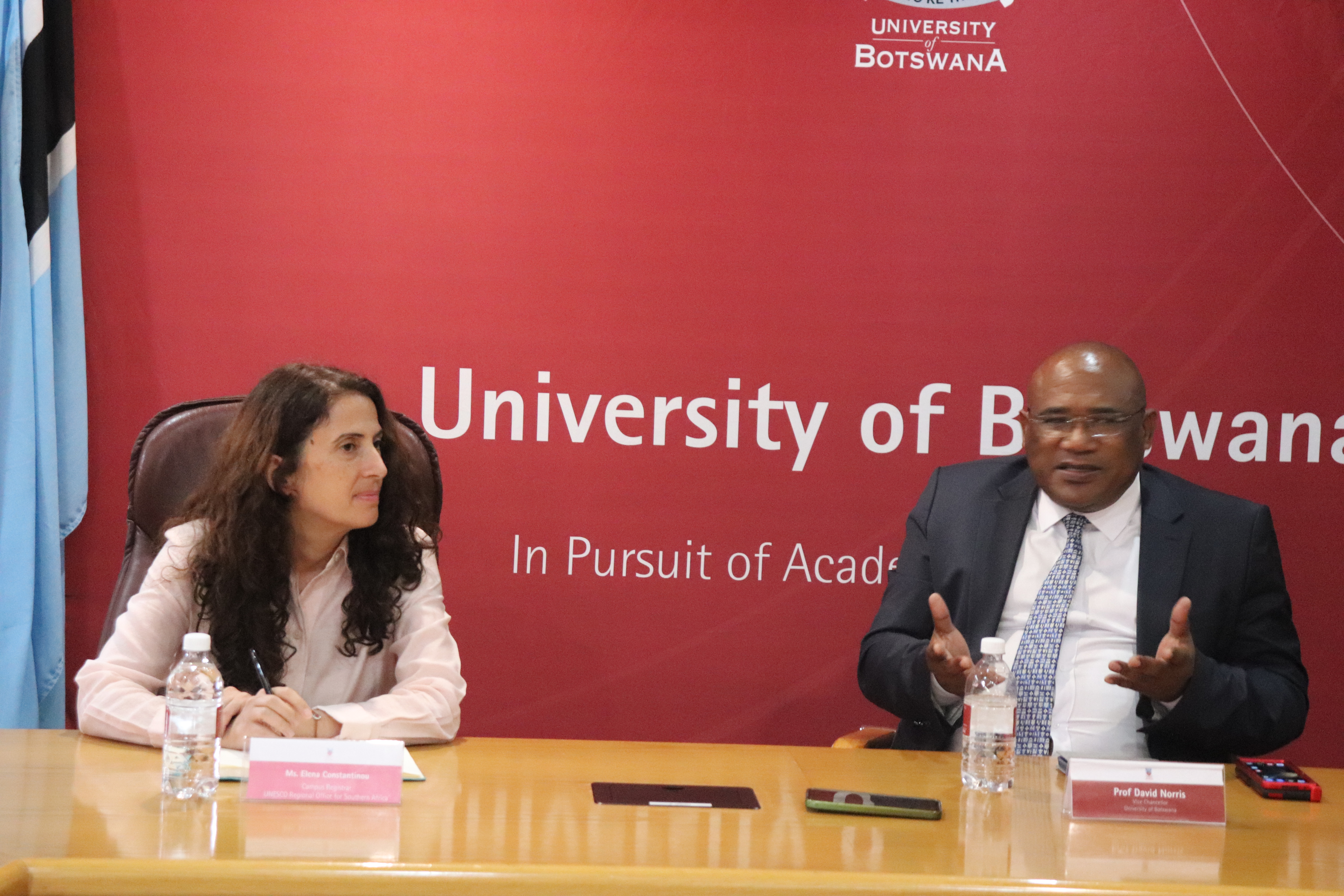 The University of Botswana (UB) and the United Nations Educational, Scientific and Cultural Organisation (UNESCO) are exploring opportunities to strengthen Botswana’s creative industries by building local capacity to take cultural content into digital markets and unlock greater economic value for creatives.
The discussions took place on the 27th of August 2026 during a courtesy visit by a UNESCO delegation to UB where the University leadership and UNESCO officials discussed a proposed collaboration focused on capacity building, digital content and the monetisation of creative products.
Welcoming the delegation, UB Vice Chancellor, Professor David Norris, emphasised the importance of partnerships and collaboration in creating an ecosystem capable of turning ideas and knowledge into tangible outcomes. Professor Norris noted that the University already worked closely with UNESCO in several areas especially through the UNESCO Chair in Heritage Studies.
He observed that the world was moving rapidly into a digital era and Africa could not afford to miss another major technological revolution. Unlike some previous revolutions that required significant physical resources, he said, the current digital revolution was largely knowledge-driven, placing universities at the centre of efforts to ensure that Africa kept pace.
The Vice Chancellor challenged stakeholders to consider how Botswana could monetise its digital content and ensure that local creative products benefitted from the opportunities presented by digital platforms.
Responding to the Vice Chancellor, Secretary General of the Botswana National Commission for UNESCO, Mr Itseng Kwelagobe, said the Commission, as a government agency responsible for interfacing with UNESCO in Botswana, welcomed partnerships that could translate UNESCO programmes into meaningful national outcomes.
Mr Kwelagobe noted that UNESCO’s mandate covered five (5) major programme areas, namely education, social and human sciences, natural sciences, culture and information and communication. He further highlighted Botswana’s commitment to implementing the 2005 UNESCO Convention on the Protection and Promotion of the Diversity of Cultural Expressions which the country has ratified.
Mr Kwelagobe said the partnership presented an opportunity for UB to contribute to the development of Botswana’s creative arts industry and help young people turn their talents into sustainable opportunities.
UNESCO Regional Advisor and Head of the Culture Unit for Southern Africa, Ms Elena Constantinou, said collaboration with UB was important in addressing the capacity gaps preventing Botswana’s creative sector from effectively accessing digital markets.
She explained that the proposed project emerged from findings of a recent assessment and sought to develop the capacity of creatives to operate effectively in the digital marketplace. UNESCO was, therefore, looking to work with a local university to co-create a programme that can provide long-term training and support in response to the needs identified within Botswana’s creative sector.
Ms Constantinou said the ultimate objective was to make Botswana’s creative content more accessible through digital platforms. If successful, she said, the model could potentially be adapted and rolled out across the Southern African region.
International Expert, Mr David Waweru, said the creative economy had moved to the centre of discussions on employment creation and economic development globally. He cited estimates putting the global creative economy at approximately US$2.25 trillion and employing about 29.5 million people, with young people constituting a significant proportion of those employed in the sector.
He said the challenge was to understand how Botswana could harness its existing creative talent and ensure that value generated from creative products was captured by the creatives themselves. That, he noted, required stronger capacity development, reliable data and evidence to inform policy and programme design.
Mr Waweru highlighted music as one area with significant potential, noting that 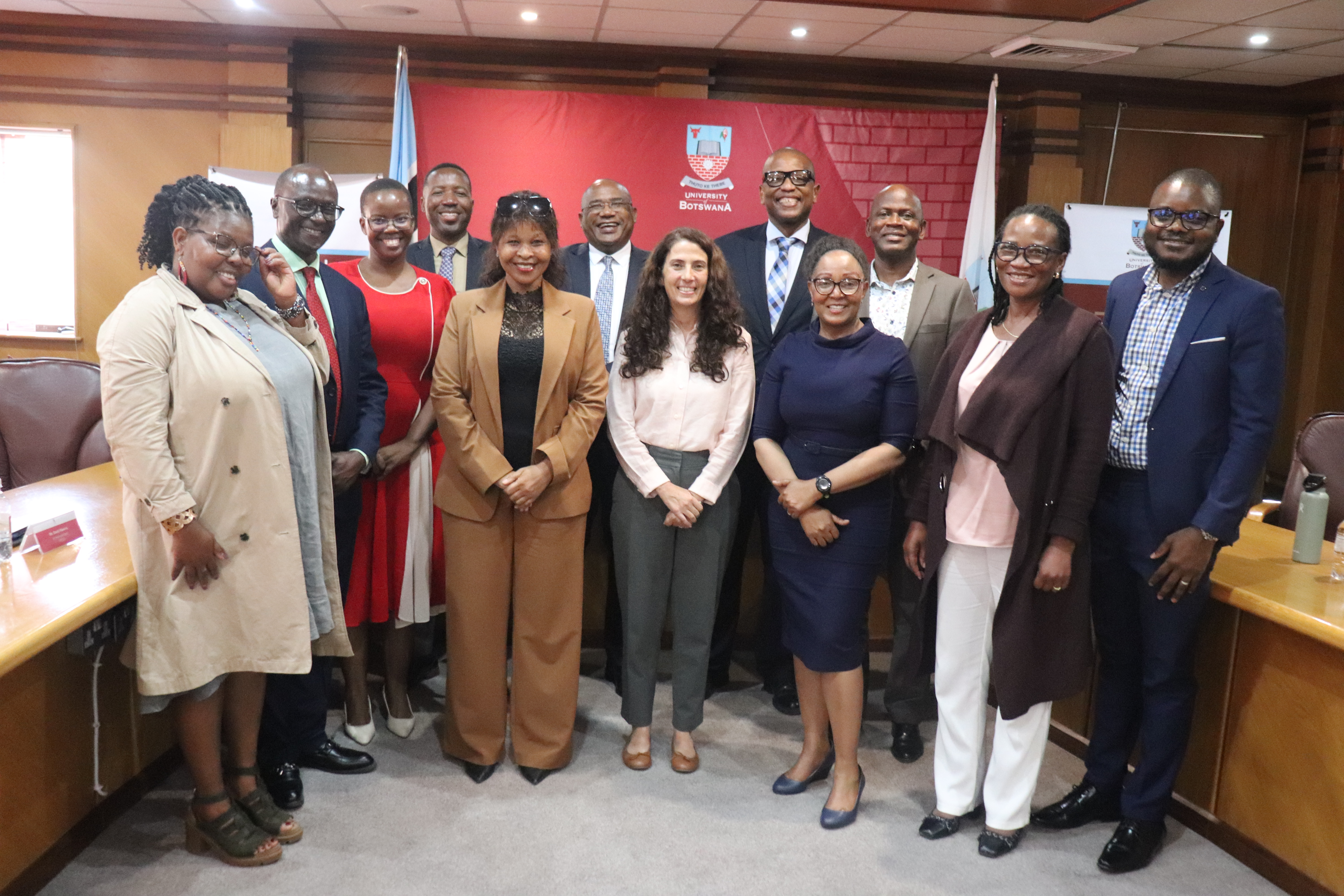 millions of consumers purchased music digitally. Botswana’s musicians and other creatives, he said, needed the skills and systems to participate effectively across the entire digital value chain and benefit from the economic value generated by their work.
Closing the meeting, Deputy Vice Chancellor Research and Enterprise, Professor Doreen Ramogola-Masire, welcomed the proposed collaboration and applauded UNESCO for identifying UB as a potential partner. Professor Ramogola-Masire noted that arts, culture and the creative industries were emerging as important priority areas for the University and present significant opportunities for research, innovation, skills development and societal impact.