Scientists at ORI Probe Possible Link Between Water Quality and Kidney Health Concerns Around Delta Communities
 Growing concern over rising cases of kidney-related illnesses in some communities around the Okavango Delta has prompted scientists to begin examining whether water quality could be a contributing factor. No scientific study has yet confirmed any direct link. Consequently, the emerging health concerns are now driving calls for urgent, coordinated research to establish the source of the problem.
For Dr Nashaat Mazrui, a research scholar in analytical chemistry at the Okavango Research Institute (ORI), the situation underscores the importance of ongoing scientific work on trace elements in water systems and their potential implications for human health.
Since joining ORI in 2019, Dr Mazrui has been studying trace elements - substances that occur naturally in water but may become harmful when concentrations rise above a certain threshold. Her work focuses on analysing water, sediment and biota samples to determine whether these elements are increasing in the Delta system and what risks they may pose to ecosystems and communities.
“We are looking at both water, sediment, fish and plant systems to build a comprehensive dataset,” she explains, noting that “the goal is to ensure that we have sufficient baseline information, not just for now, but for future studies as well.”
The concern is particularly significant given the Delta’s global ecological importance. The Okavango Delta is designated as a Ramsar Site under the Ramsar Convention on Wetlands, adopted in Ramsar in 1971 to protect wetlands of international importance. The designation places an obligation on Botswana to ensure its sustainable management and protection.
“As ORI, we want to make sure that the Delta retains its Ramsar status,” says Dr Mazrui, adding “that means continuously generating scientific evidence to guide conservation and management.”
While surface water monitoring continues to show the importance of maintaining low pollution levels, preliminary groundwater assessments have revealed elevated concentrations of certain elements, some exceeding thresholds set by the Botswana Bureau of Standards (BOBS) and World Health Organisation (WHO).
Researchers caution, however, that more work is needed to determine whether these findings are linked to the reported health concerns including kidney-related illnesses in nearby communities. At this stage, no causal relationship has been scientifically established and scientists emphasise that the issue remains under investigation.
In response, ORI is working with health experts and local authorities to develop a multidisciplinary research agenda. The team is preparing applications for research grants aimed at conducting a comprehensive study into water quality, groundwater composition and potential health impacts in affected areas. In the meantime, interim measures are focused on public awareness particularly educating communities on safe practices when harvesting and using rainwater for domestic consumption. Longer-term interventions under consideration include the development of water purification systems to improve safety in vulnerable areas.
“These findings require urgent attention,” says Dr Mazrui, noting that ORI is also collaborating with researchers from France to 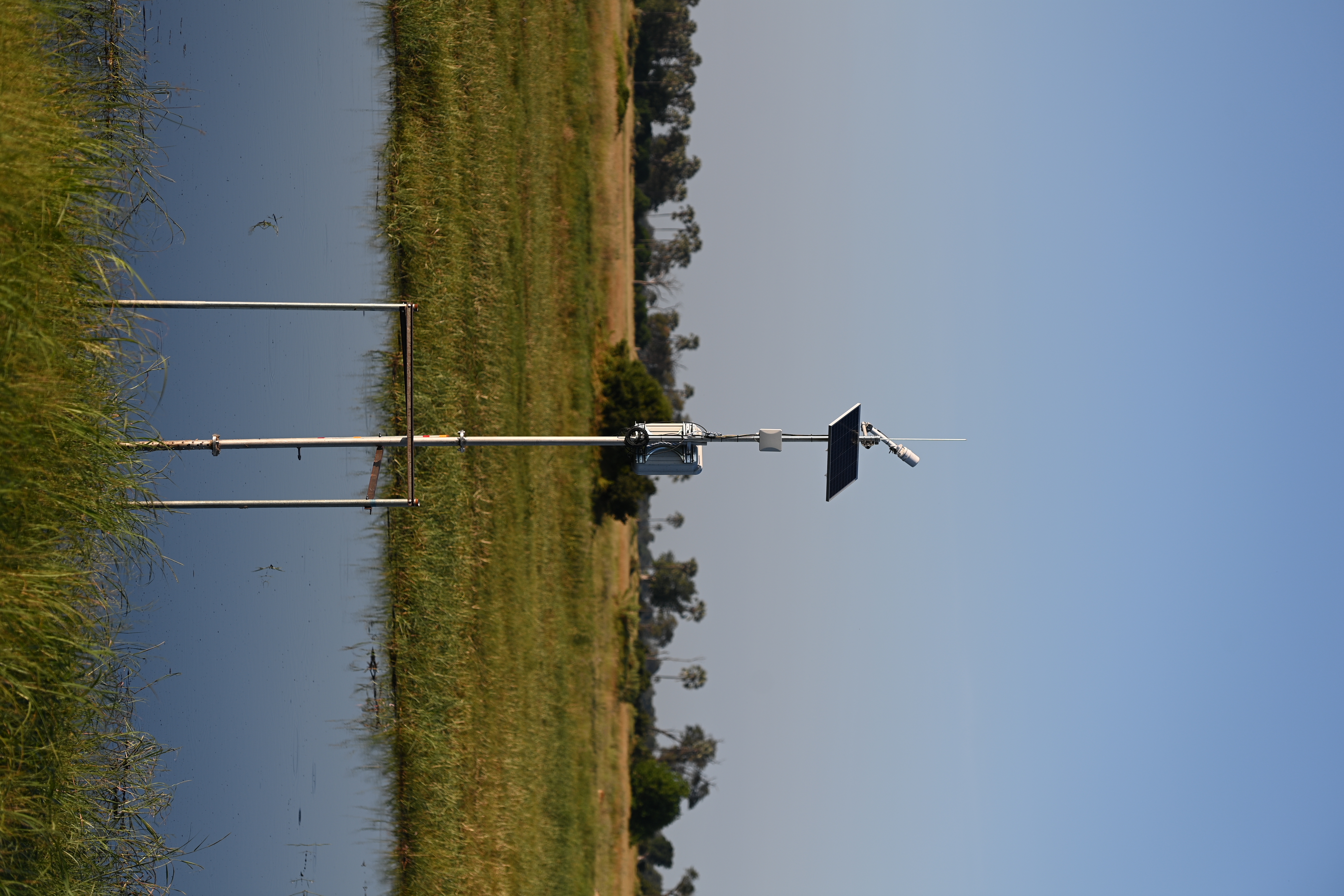 strengthen analytical capacity and deepen understanding of water quality dynamics in the region. “It is about identifying potential risks early and working towards solutions,” she reckons.
Beyond the immediate concerns, Dr Mazrui sees ORI as playing an increasingly important role in global environmental science. Growing international interest in the Delta is positioning the institute as a key research hub for wetland systems and climate-sensitive ecosystems.
“The future of ORI is promising,” she reflects, arguing that “there is growing global attention on the Delta and that creates opportunities for collaboration, innovation and deeper scientific exploration.”
She emphasises that such work must ultimately help deepen understanding of how the Delta functions in its natural state. This knowledge, she says, is not only critical for local conservation but also valuable for global environmental research.
“In many ways, the Okavango Delta can serve as a reference system,” she says, adding “if we understand how it functions in a pristine condition, it becomes a valuable case study for similar ecosystems around the world.”
For Mazrui and her colleagues, the priority remains clear: to ensure that emerging warning signs, whether in water chemistry or community health trends, are scientifically interrogated early enough to inform prevention, protection and sustainable management of one of the world’s most important wetland systems.