Remembering Peter Smith: The Man Who Planted Botswana’s Botanical Legacy at ORI
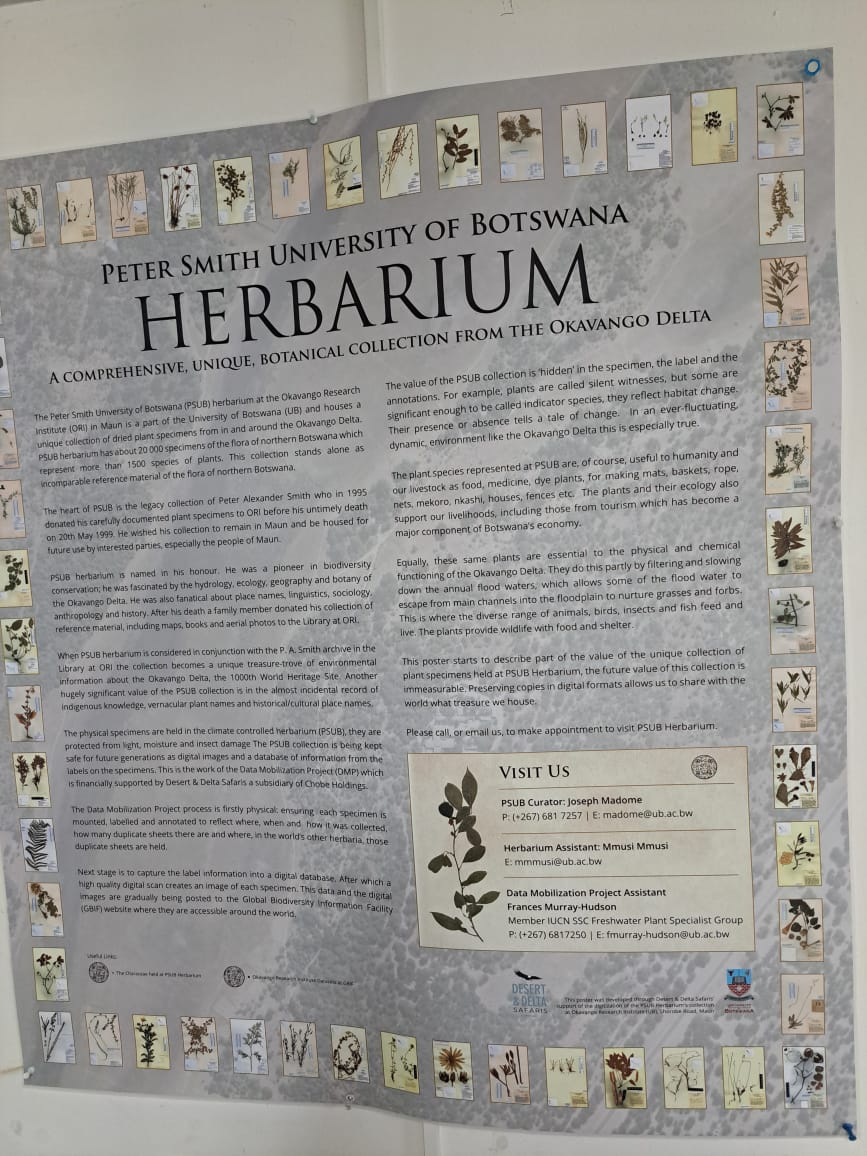 Before the advent of digital biodiversity databases and global conservation platforms, one man quietly traversed the floodplains, woodlands and marshes of northern Botswana, driven by a deep passion for plant life and a vision to preserve the natural heritage of one of the world’s most remarkable ecosystems, the Okavango Delta.
That man was Peter Alexander Smith. His life’s work now forms the foundation of the Peter Smith University of Botswana Herbarium internationally indexed as the (PSUB) housed at the University of Botswana's Okavango Research Institute (ORI) based in Maun. By any measure that is an enduring tribute to his contributions to science and conservation.
For more than three decades, Smith lived and worked in and around the Okavango Delta, a vast inland wetland rich in floral and faunal diversity. Smith worked at the Aquatic Vegetation Control Unit (AVCU) of the then Department of Water Affairs (DWA).
Staff at the PSUB Herbarium fondly acknowledge Smith’s contribution to the overall ecological management of the Okavango Delta. Sadly, Smith passed on 1999, barely two (2) years after the establishment of the herbarium. Fortunately, his family donated the remaining maps, reference books, photographs, correspondences and files that all carried the background to the plant species he had collected and handed to the herbarium in his lifetime.
Beginning his botanical journey in the mid-1970s, he meticulously collected plant specimens across Botswana, documenting species from the ever-flowing waterways to dry savannahs. His fieldwork was not merely about amassing dry leaves and stems but a mission to understand and safeguard Botswana’s plant life at a time when formal botanical study in the region was still taking shape.
In 1995, Smith donated his extensive personal collection to the University of Botswana, ensuring that his decades of fieldwork would serve a greater purpose. The collection became the heart of what is now the Peter Smith University of Botswana Herbarium. Today, the herbarium holds thousands of specimens - largely from Botswana’s northern regions, in particular the Okavango Delta. It also serves as a critical reference for researchers, students and conservationists alike.
More interesting is that the herbarium’s role extends beyond static preservation. Staff and collaborators continue to digitise and catalogue Smith’s legacy collection into modern databases, making it accessible for taxonomic verification, ecological research and conservation planning. His carefully pressed and labelled specimens, many collected from remote and seasonally inaccessible areas, provide historical baselines that allow scientists to track vegetation change, climate impacts and species distribution shifts over time.
Yet colleagues at ORI say Smith’s greatest gift was not just the specimens he gathered but the spirit of curiosity he inspired. Known for his patient mentorship and deep knowledge of Botswana’s landscapes, Smith often involved young researchers and community members in his expeditions. This is confirmed by ORI Director, Dr Casper Bonyongo, who hails Smith for his exploits. In a light moment, Dr Bonyongo stated that Smith is the one who taught him the delta as he knows it today.
Generally, Smith believed that conservation could not succeed without local understanding and participation, said colleagues at the ORI. Therefore, by sharing his skills in plant identification, specimen preparation and ecological observation, he planted seeds of knowledge that continue to bear fruit decades later.
Thus, Smith’s work has proven invaluable in contemporary conservation efforts. As development pressures and climate variability increasingly shape Botswana’s ecosystems, accurate plant records are essential for environmental impact assessments and biodiversity management.
Consequently, the herbarium provides verified reference material that informs policy decisions, protected area planning and academic research. In many cases, Smith’s original collections represent the earliest formal records of certain species in parts of northern Botswana.
Apart from academia, the collection also holds cultural significance. This is because many of the plants Smith documented have traditional medicinal, nutritional or artisanal uses. To this end, by preserving these specimens, he indirectly safeguarded aspects of indigenous knowledge systems that are closely tied to Botswana’s flora.
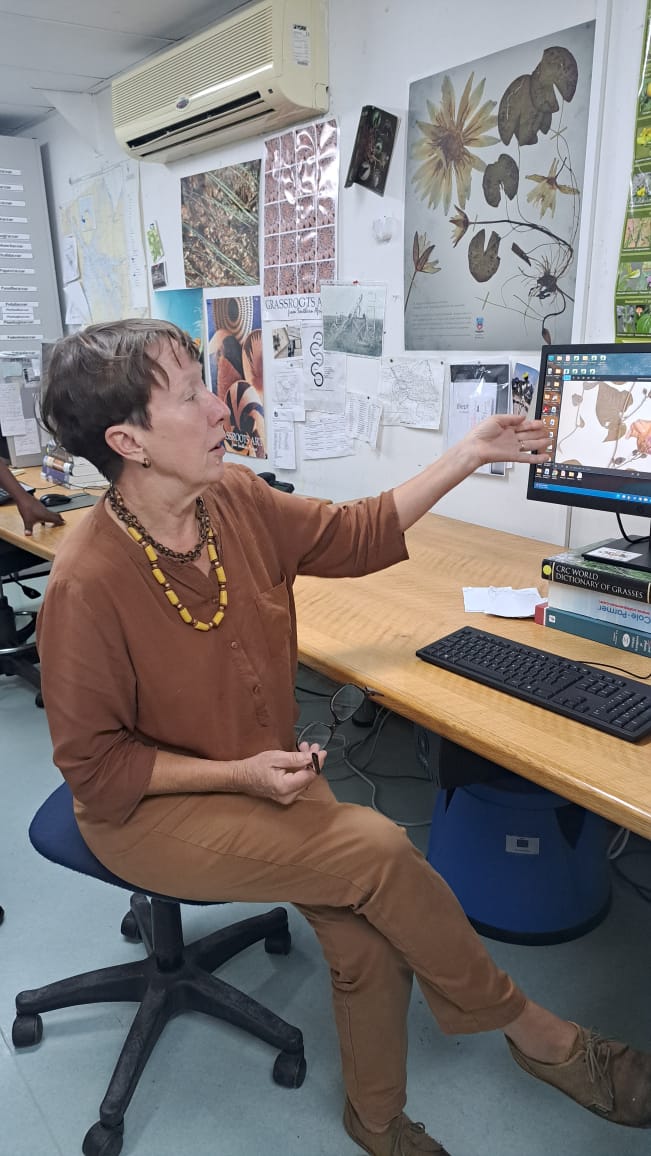 Researchers today are able to cross-reference herbarium samples with ethnobotanical studies, strengthening the link between science and community heritage all thanks to his earlier collections.
For ORI, naming the herbarium after Peter Smith was both an honour and recognition of a life devoted to Botswana’s natural heritage. The facility stands as a reminder that scientific progress is often built on quiet, sustained dedication rather than grand gestures. Each herbarium specimen reflects years of fieldwork, observing, recording and preserving elements of living ecosystems.
As Botswana continues to position itself as a leader in conservation and sustainable development, Smith’s legacy remains embedded in its scientific institutions. The herbarium is not merely a repository of specimens but a living archive of the country’s botanical history.
Project Assistant at the herbarium, Mrs Frances Murray-Hudson, underscores its national significance, describing it as the “golden egg” of Botswana. She notes that while people travel from across the world to experience the Okavango Delta, the herbarium serves as a critical reference point particularly in understanding environmental changes such as vegetation adaptation in the face of threats like climate variability.
Smith’s contributions laid the foundation for this work to ensure that Botswana continues to benefit from both conservation and tourism. His legacy endures through a resource that not only preserves the past but supports the sustainable management of one of the world’s most remarkable inland deltas.