PIRA Project Comes Alive as UB Students Drive Inclusive Transitions for Learners with IDD
 As the year drew to a close and ushered in a sense of reflection and renewal, students from the University of Botswana (UB) Department of Special Education chose to end 2025 on a high note, not with celebrations alone, but with action that quietly transformed lives. During the month of November, the students embarked on a series of practical, community-based initiatives aimed at improving the transition from school to post-school life for learners with Intellectual and Developmental Disabilities (IDD), reaffirming the University’s commitment to inclusion, impact and social responsibility.
Driven by a desire to translate theory into meaningful practice, the students spent three months embedded in special education units of their choice, working closely with learners they selected based on prior teaching practice experiences. The goal was to demonstrate that with individualised teaching, recognition of strengths and interests and strong collaboration among stakeholders, learners with IDD can acquire practical skills that enhance their prospects for employment, independence and dignity.
The initiatives also served as an advocacy platform, raising awareness among teachers, parents, government and non-governmental organisations, potential employers and other key stakeholders. At the heart of the message was a simple but powerful truth. When communities work together, lives can change for the better and learners with IDD can move beyond lifelong dependency into meaningful participation in society.
For many special education units, a persistent challenge has been that learners with IDD often complete their schooling without acquiring skills that translate into economic opportunities. Despite years in the classroom, many graduate only to return home, having spent much of their school time on routine activities with little long-term value. This gap between education and employability has continued to limit independence, reinforcing reliance on families and government support. UB students’ interventions directly confronted this reality.
Their work was rooted in the UB-led Partnerships for Innovative Research in Africa (PIRA) project which seeks to develop a contextually relevant transition framework for learners with IDD. One of the project’s key outcomes is to see these learners transitioning successfully into employment and independent living. While the framework has already been developed and is awaiting funding for large-scale training and piloting, the Department of Special Education has proactively begun implementation by equipping student teachers, soon to graduate into special units, with practical skills and applied knowledge.
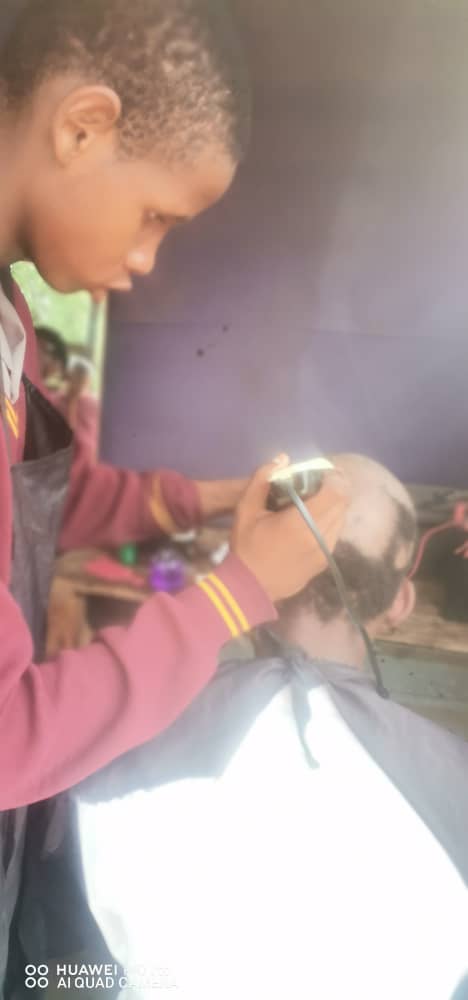
Using assessment results, the students worked with learners to develop individualised transition plans in collaboration with key stakeholders. Training took place in real-life employment environments where the skills would ultimately be used. Activities ranged from baking, hairdressing and shoe cleaning to laundry work, shopping and money-handling skills. Crucially, these were not simulated exercises but hands-on experiences conducted in authentic settings.
 Partnerships played a vital role in bringing the initiative to life. Executive Catering Company at the University of Botswana opened its doors to support baking and food preparation skills while the University’s Department of Buildings provided materials to help set up simple shoe-cleaning and hair-cutting stations. The collaborations exposed learners to real work environments while reinforcing the importance of shared responsibility in inclusive development.
The impact of the initiatives extends well beyond the classroom. For learners with IDD, the programme offers more than skills. It opens the door to income generation, independence, pride and a renewed sense of self-worth. Families experience both financial relief and emotional reassurance as their children demonstrate capability and contribution. Communities begin to shift perceptions, recognising learners with IDD not as dependants but as productive members of society.
At a national level, the initiative aligns strongly with Vision 2036 and the Inclusive Education Policy by turning investment in special education into tangible outcomes, reducing long-term welfare dependency and strengthening social inclusion. Above all, it illustrates the University of Botswana’s role in touching lives at the margins and shaping a more inclusive future.