Launch of Bachelor of Culinary Arts Programme to Unlock Opportunities in Creative Economy
 The University of Botswana (UB) has officially launched its newly accredited Bachelor of Culinary Arts degree programme, marking a significant step towards broadening the University's academic offering and developing specialised skills for Botswana's hospitality, tourism and food-service industries.
The launch, held at the UB UniPod on the 12th of November 2026, was led by the newly established Department of Creative and Applied Arts and Design under the School of Media, Information and Creative Arts in the Faculty of Humanities, Education and Social Sciences (HESS). Accredited by the Botswana Qualifications Authority (BQA), the four-year programme is expected to admit its first cohort in the 2027/2028 academic year.
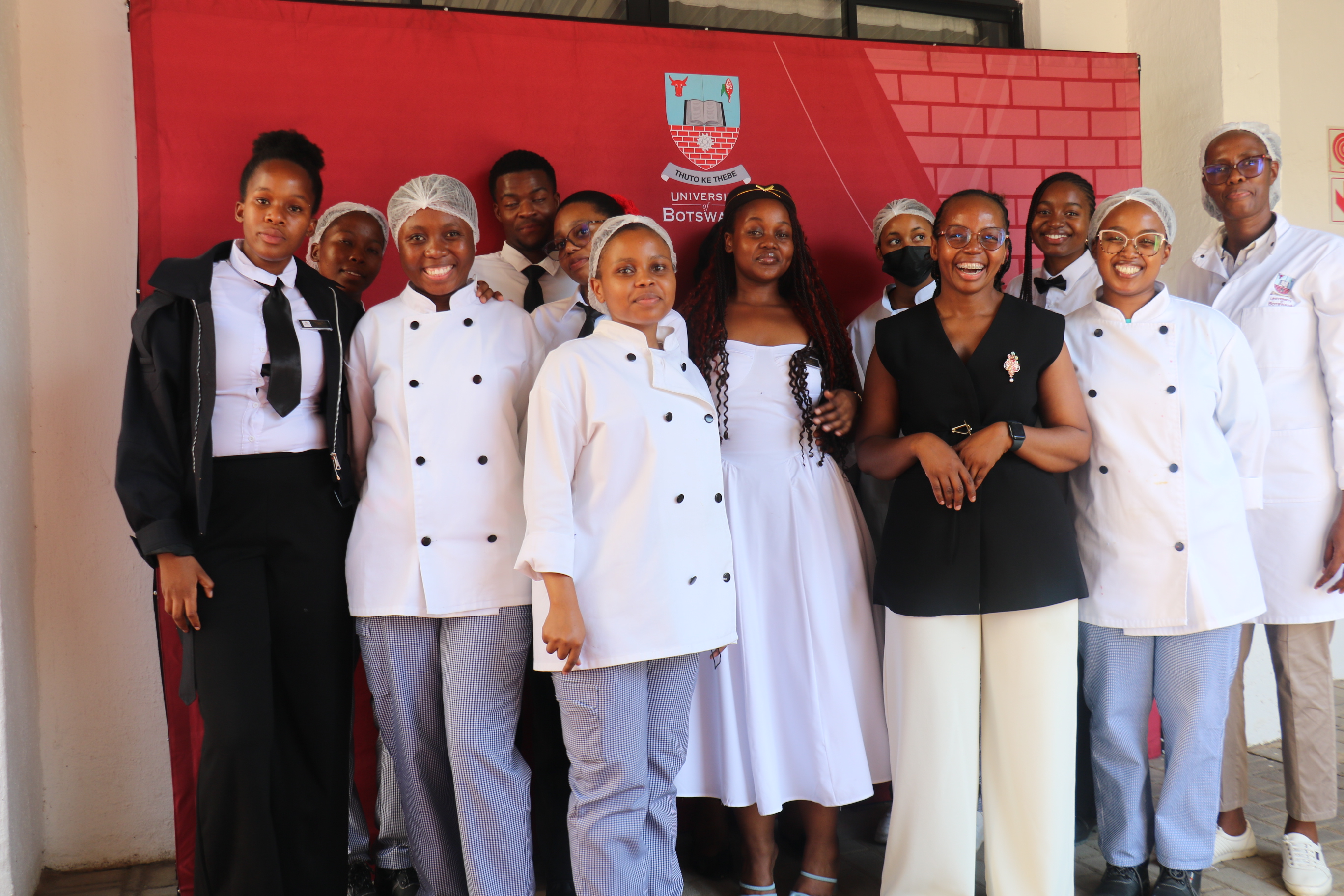
The occasion also provided a practical examination platform for students pursuing the Bachelor of Family and Consumer Sciences, who are enrolled in the FCS 304 Meal Management course. Operating under the pop-up restaurant concept, La Grande Royal Restaurant, the students demonstrated their culinary, hospitality and operations management skills by preparing and serving a multi-course tasting menu to the University leadership and industry stakeholders.
Welcoming guests, Dr Lily Clara Fidzani, Senior Lecturer and Acting Head of the Department of Family and Consumer Sciences, highlighted the University's commitment to nurturing the creative economy and developing academic programmes that responded to essential human needs. Drawing on Abraham Maslow's hierarchy of needs, she explained that the department's programmes addressed fundamental needs such as food, shelter and clothing while creating opportunities for innovation and entrepreneurship.
“Now the University has recognised the need to have a department for the creatives. Instead of training Batswana abroad, they will now be able to train them here in the country,” said Dr Fidzani.
Referring to the students' practical showcase, she explained that the exercise formed part of their assessment, noting: “What we are doing today, they are in the middle of an exam. Ours are not written but practical.”
Speaking at the event, Professor William Ofentse Lesitaokana, Head of the School of Media, Information and Creative Arts, reflected on the University's evolution from a traditionally humanities-focused institution to one that increasingly embraced applied creativity and entrepreneurship. He said the Bachelor of Culinary Arts extended beyond food preparation to incorporate nutrition, food science, cultural heritage, business management and innovation.
“The future belongs to professionals who can successfully combine tradition with innovation, creativity with business acumen and technical expertise with entrepreneurship,” said Professor Lesitaokana.
He described the programme as a significant development for both the University and the country, observing: “Very soon we will be talking the art and science of making food, which I believe is something remarkable, not only for the University of Botswana but for Botswana as a country.”
Delivering the official opening address, Director of the Centre for Learning and Teaching Innovation (CeLTI), Professor Olekae Thakadu, commended the Department and its industry partners for their collaboration in developing the programme. They include the UB Hotel and Conference Centre, Princess Marina Hospital, Sir Ketumile Masire Teaching Hospital, The Moghul, Executive Catering and UniPod.
He said the qualification reflected UB's commitment to producing innovative and  adaptable graduates equipped to contribute to national development and create employment opportunities.
“This occasion marks more than the introduction of a new academic qualification. It represents our commitment to providing relevant education, developing specialised skills, promoting innovation and preparing graduates who can contribute meaningfully to Botswana's economic and social development,” said Professor Thakadu.
Officially launching the programme, he called on stakeholders to support its long-term success, saying: “Let us develop graduates who transform creativity into enterprise, innovation into opportunity and culinary excellence into a driver of national development.”