Dr Bonyongo Champions ORI’s Vision for a Science-Driven Okavango Basin
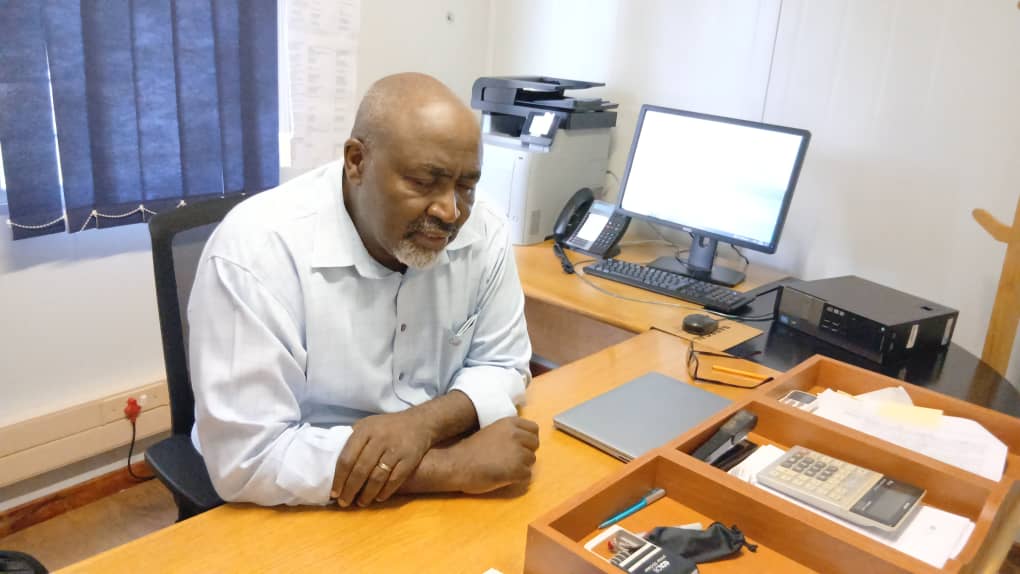 There is a quiet confidence in the way Okavango Research Institute (ORI) Director, Dr Casper Bonyongo, speaks about the future of the Institute. His confidence is the kind that comes not from speculation but from having witnessed how close the Okavango Delta once came to irreversible change.
Dr Bonyonog recalls, almost in passing, the debates that once surrounded the Boro River. At the time, the proposal to dredge and straighten the channel appeared practical. Water was needed for a growing Maun and for industrial demands such as the Orapa Diamond Mine. Yet what seemed like an engineering solution quickly revealed deeper complexities. Scientists, communities and conservationists pushed back, warning that the Delta’s balance could not be engineered without consequence. The project was ultimately halted but it left behind a more enduring lesson: Botswana needed its own scientific capacity to guide decisions of such magnitude.
That realisation would, in time, give rise to Okavango Research Institute popularly known as ORI. Today, Dr Bonyongo’s focus is firmly on what comes next. For him, the lesson of that moment is not historical but strategic. The Delta’s future, he argues, will depend on the country’s ability to anticipate pressures through science rather than respond to them after the fact.
That ambition is beginning to take institutional shape. Under the University of Botswana (UB) High-Performance Organisation (HPO) framework, ORI is strengthening its internal capacity, with a staff complement now standing at 62. Of these, 26 are academic staff with six (6) vacancies yet to be filled. For support staff, the number stands at 36 with 17 vacancies and the numbers expected to rise as vacancies are filled to form a growing support base for an increasingly complex research environment. The academic structure is being streamlined into natural and social science streams, reflecting the reality that environmental challenges are as much about people as they are about ecosystems.
At the same time, ORI continues to invest in the next generation of researchers. Since the launch of its graduate programme in 2009, it has produced 47 postgraduate graduates comprising 32 MPhil and nine (9) PhDs, an expanding intellectual base that is steadily reinforcing its research capacity. Yet for Dr Bonyongo, numbers alone do not define the institute’s trajectory. What matters is how that capacity is deployed.
“The Delta does not begin in Botswana,” he often points out. Its waters rise in the Angolan highlands, flow through Namibia and only then reach Botswana. To understand the system is to think regionally. This is where ORI’s vision sharpens. The institute is positioning itself as a scientific anchor within the basin, forging collaborations with universities in Angola and Namibia while strengthening engagement with the Permanent Okavango River Basin Water Commission (OKACOM). The aim is to build a shared knowledge base that can guide how the basin is managed across borders.
The urgency is growing. Angola, emerging from years of conflict, is now exploring its development potential. Namibia continues to expand mining activities while Botswana faces its own pressures including prospects such as oil exploration. Each of these carries implications for a river system that does not recognise national boundaries. Without coordinated scientific insight, those pressures risk converging on the Delta.
It is precisely this convergence that ORI seeks to anticipate. Dr Bonyongo envisions an institute that not only studies change but shapes the decisions behind it to ensure that development is informed by evidence rather than expediency.
Back in Maun, that vision is also being pursued through strategic outreach. Recently, Dr Bonyongo, accompanied by UB Chancellor, Ms Tebelelo Mazile Seretse, engaged a number of embassies to mobilise support and funding for ORI’s expansion. The engagements signalled a growing recognition that building a world-class research hub will require not only national commitment but international partnerships.
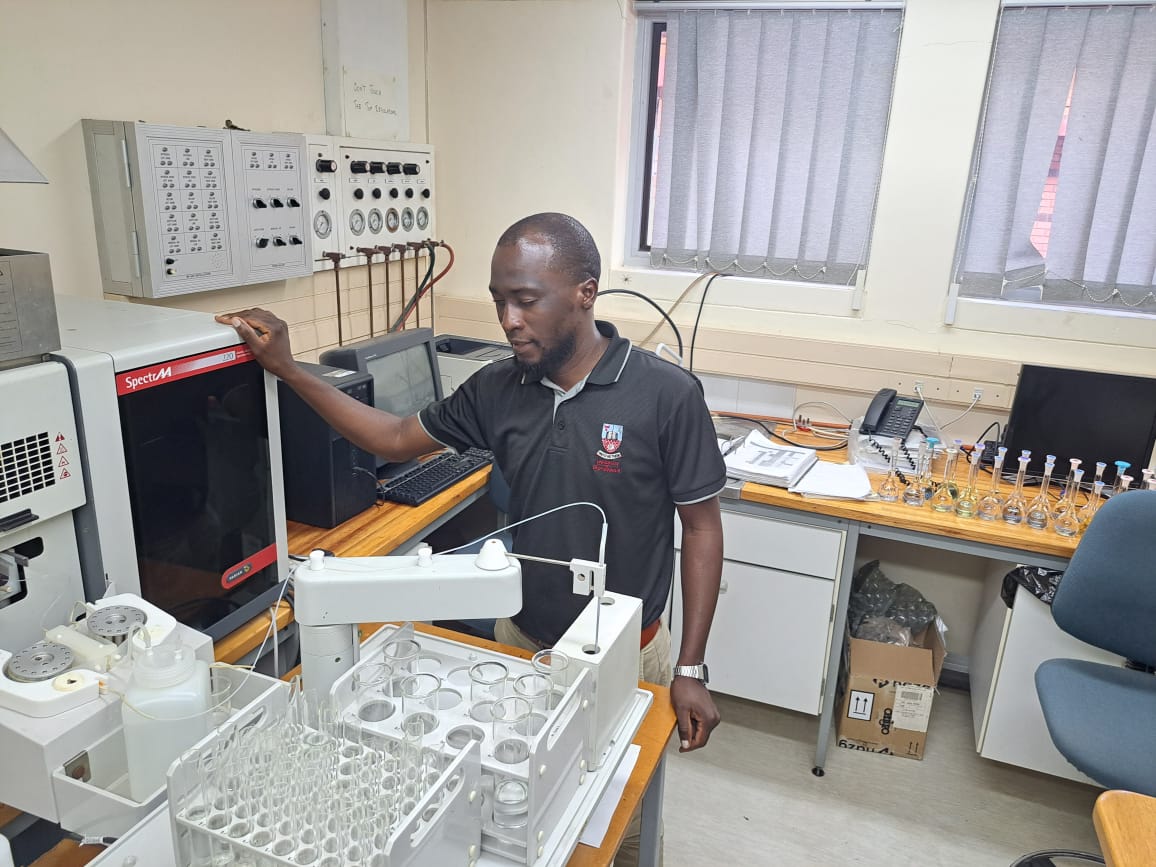
At the same time, plans are underway to elevate ORI’s laboratory to internationally accredited standards, positioning it as a regional centre for scientific analysis serving universities, governments and industry. Partnerships, including those with the Southern African Science Service Centre for Climate Change and Adaptive Land Management (SASSCAL), are further strengthening research in biodiversity and ecosystem health.
 However, challenges remain. Funding constraints and the absence of a dedicated national research council continue to limit the pace of expansion. Yet even here, Dr Bonyongo sees the need for sharper focus, thus aligning research priorities with emerging regional realities and building alliances that enhance competitiveness.
Because, ultimately, the story of ORI is no longer anchored on the controversy that inspired its creation but in the new role it now seeks to play. Consequently, the same river system that once sparked national debate is today part of a far larger equation, one that spans Angola, Namibia and Botswana, carrying with it competing demands of development and conservation. Within that space, ORI is positioning itself not as a passive observer but as a source of authority. A place where science leads. Where knowledge connects borders and where the future of the Okavango Delta is shaped not by uncertainty but by evidence.