Colombian Ambassador Calls for Research Collaboration with University of Botswana
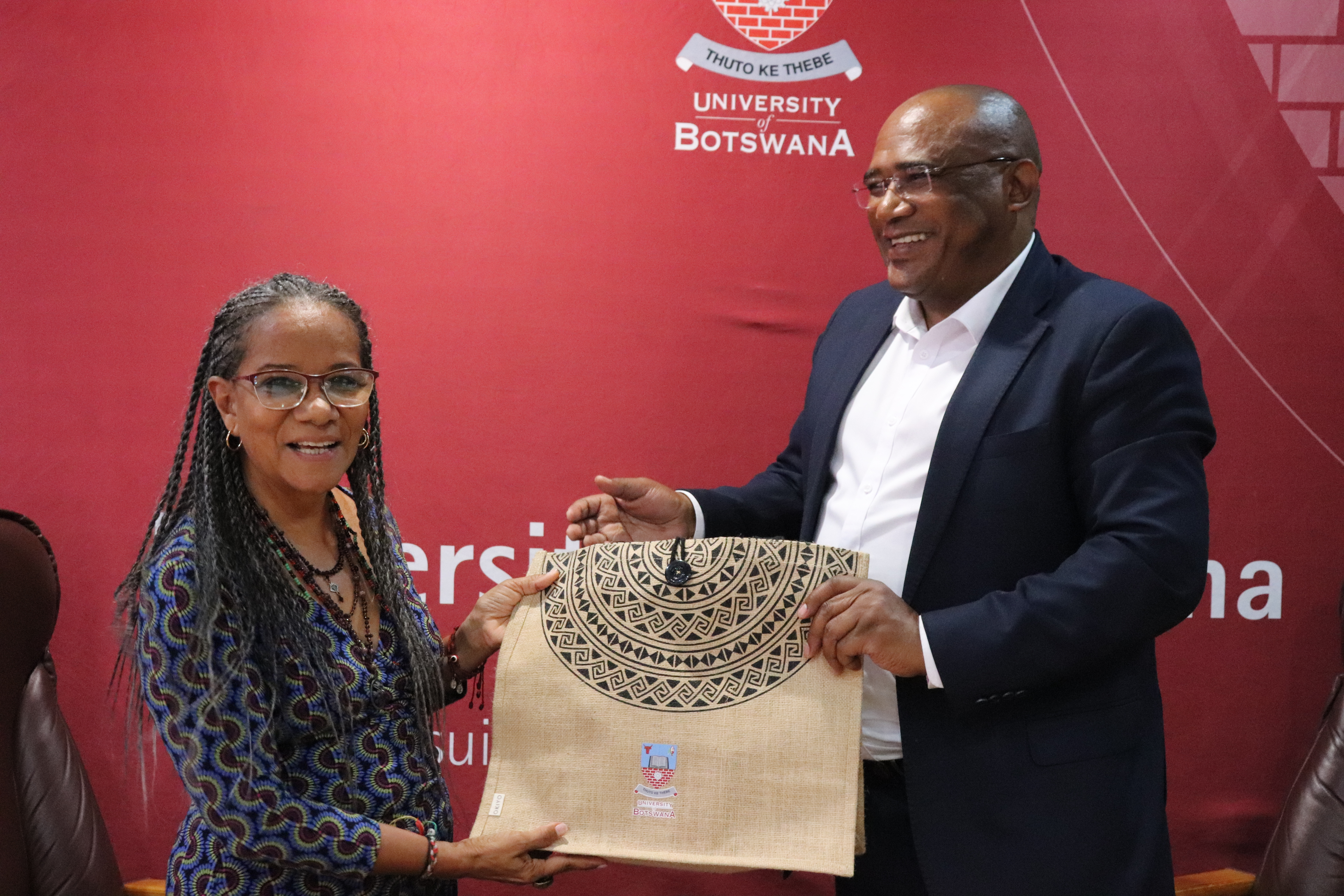 The University of Botswana (UB) is exploring new avenues for international research collaboration following a courtesy visit by Ambassador of Colombia, Her Excellency Mina Rojas, to UB Vice Chancellor Professor David Norris on the 4th of March 2026.
The meeting focused on strengthening academic partnerships between UB and Colombian universities through joint research initiatives, student and staff exchange programmes, scholarships and collaboration in areas such as Technical and Vocational Education and Training (TVET), indigenous knowledge and innovation.
Speaking during the visit, Ambassador Rojas expressed Colombia’s interest in building stronger academic networks between African and Colombian universities.
“The purpose of this courtesy call is to build networks between Colombian and African universities and explore opportunities for research collaboration, scholarships and academic exchanges,” she observed.
Ambassador Rojas further noted that Colombia hosted several universities dedicated to the study and preservation of indigenous knowledge systems. She highlighted ongoing initiatives aimed at documenting, protecting and developing traditional methodologies and practices.
“This engagement presents an opportunity for collaboration between our regions particularly in promoting indigenous knowledge and innovation,” she added, noting that the Colombian Embassy was ready to facilitate partnerships between institutions.
In his remarks, Professor Norris welcomed the opportunity for collaboration and emphasised the potential benefits of joint research initiatives between UB and Colombian institutions.
“Collaboration with Colombian universities in joint research ventures has the potential to catalyse the commercialisation of the extensive research conducted in Botswana on indigenous knowledge,” he said.
Professor Norris noted that such research could contribute to developments in sectors such as pharmaceuticals, agriculture and 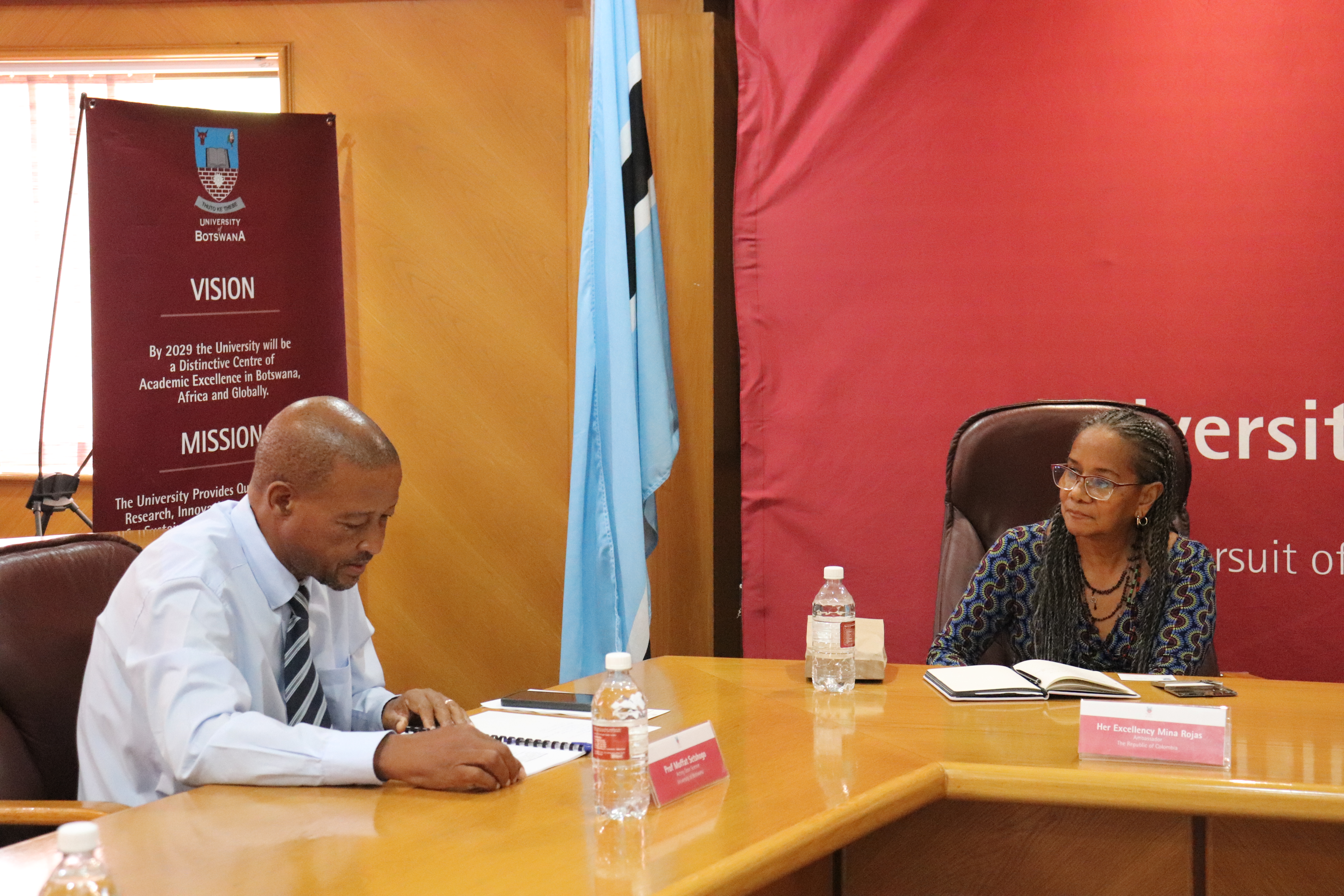 sustainable practices. He added that the University of Botswana remained committed to strengthening its research and innovation agenda as part of its vision to become a leading research-intensive institution.
Acting Dean of the Faculty of Science, Professor Moffat Setshogo, also highlighted the University’s ongoing work in indigenous knowledge and innovation.
“The linkages facilitated by the embassy present an important opportunity for expansion and knowledge production,” he said. “The University has conducted extensive research and awareness initiatives on indigenous knowledge including work related to genetic resources. This collaboration could help unlock the potential of existing research and data.”